
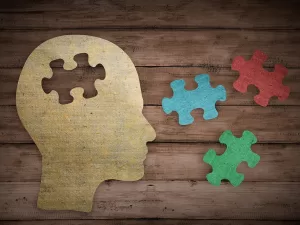
photo credits to owner
Every time we recall a memory, we’re not just replaying it — we’re rebuilding it. Details get altered, gaps get filled in, and sometimes, entirely new elements appear. This process, known as reconstructive memory, reveals just how unreliable human memory can be.
Memories are guided by schemas—mental frameworks or patterns of thought—that help us organize and interpret information. These schemas shape how we encode and retrieve memories, often filling in blanks with assumptions or expectations. When we retrieve a memory repeatedly, we may reinforce parts of it, but we’re also at risk of reinforcing errors—especially if those errors align with our pre-existing beliefs.
Numerous studies have shown how internal biases (like beliefs, emotions, and expectations) and external influences (like leading questions or media exposure) can distort memory and even lead to the creation of entirely false memories (Hemmer & Steyvers, 189). The problem? These inaccuracies often feel just as real as true memories.
At first glance, this might not seem like a big deal. So what if you misremembered what your friend wore last Friday or slightly exaggerated that vacation story? In everyday life, these minor distortions are harmless. But in settings like the courtroom, where eyewitness testimony can be the deciding factor in a conviction, reconstructive memory can have devastating consequences. False memories can, and have, sent innocent people to prison.
So how can we detect if a memory is false?
There are two general approaches:
- Focusing on the memory itself
- Focusing on the person recalling it (Bernstein et al.)
When targeting the memory, researchers often observe brain activity during behavioral tasks. These methods provide insight into how memory works in real-world contexts. Tools like fMRIs (Functional Magnetic Resonance Imaging), which track blood flow in the brain, and ERPs (Event-Related Potentials), which detect electrical responses to stimuli, have helped scientists locate areas like the temporal lobe, which are deeply involved in false memory formation (Schacter & Slotnik, 2004).
When focusing on the individual, techniques resemble what you might see in a crime show—polygraph tests, lie detectors, and behavioral assessments. But since most people with false memories believe they’re telling the truth, scientists must examine both the content of the memory and the personality traits of the individual. Understanding a person’s background, likelihood of certain experiences, or susceptibility to suggestion helps uncover how a false memory could have formed.
One particularly haunting case was presented by psychologist Elizabeth Loftus in her TED Talk, “How Reliable Is Your Memory?” She recounts the story of Steve Titus, a man wrongly accused and convicted of sexual assault due to a victim’s mistaken identification. Despite his innocence, the false memory led to a decade-long battle and ruined his life. His case remains a chilling example of memory’s power to harm.
In conclusion, the human memory isn’t a camera—it’s a creative editor. And while this adaptability can help us make sense of complex experiences, it can also backfire, especially in high-stakes scenarios like legal proceedings. Psychologists continue to search for a reliable method to distinguish truth from fabrication in memory recall, but the answer remains elusive.
So here’s the real question—if your own memories can deceive you… how much of your past can you actually trust?
Written by:
Shriya Anandakrishnan
References:
- Bernstein, Daniel M., and Elizabeth F. Loftus. “How to Tell If a Particular Memory Is True or False.” Perspectives on Psychological Science, vol. 4, no. 4, 2009, pp. 370–74. JSTOR, http://www.jstor.org/stable/40645702.
- Cousino, Meghan. Steve Titus. 1981. The National Registry Of Exonerations (Pre 1989), https://www.law.umich.edu/special/exoneration/Pages/casedetailpre1989.aspx?caseid=331.
- Hemmer, Pernille, and Mark Steyvers. “A Bayesian Account of Reconstructive Memory.” Topics in Cognitive Science, vol. 1, no. 1, 2009, pp. 189-202. Wiley Online Library, https://onlinelibrary.wiley.com/doi/full/10.1111/j.1756-8765.2008.01010.x#b101
- Slotnick, Scott D, and Daniel L Schacter. “A sensory signature that distinguishes true from false memories.” Nature neuroscience vol. 7,6 (2004): 664-72. doi:10.1038/nn1252
Leave A Comment